PMnB delivers industrial wastewater treatment solutions designed to improve oxidation efficiency, strengthen aerobic treatment, and enhance sulphide removal and sludge treatment performance under variable industrial loads. Using chemical-free nano bubble technology, PMnB helps stabilize biological processes and reduce operating costs across industries from food processing and slaughterhouses, to manufacturing and natural gas operations, without adding chemical complexity.

When the removal of hydrogen sulfide and other compounds becomes less controlled, treatment plants face odor complaints, regulatory pressure, and rising operating costs.
PMnB improves gas transfer efficiency across industrial wastewater systems by delivering dissolved gases such as ozone, oxygen, and air through stable nano bubbles. Nano bubbles remain suspended in the wastewater, rather than escaping at the surface. This helps sustain oxidation throughout reactors and basins. It strengthens aerobic treatment in activated sludge and trickling filter systems. It also supports sulphide removal and hydrogen sulfide (H₂S) oxidation. As a result, organic matter breakdown improves across primary, secondary, and sludge treatment stages, without chemical re-dosing.
Hydrogen sulfide is common in industrial wastewater, especially in food processing, wineries, slaughterhouses, anaerobic digestion systems, and natural gas operations. PMnB enhances oxidation to improve sulphide control.

Many industrial treatment plants rely on aerobic treatment processes such as activated sludge or trickling filter systems to break down organic matter. By strengthening biological processes in secondary treatment, PMnB helps maintain consistent effluent quality under variable loading conditions.
Industrial wastewater treatment generates significant volumes of sewage sludge and biological solids. Enhanced sludge treatment performance reduces operational burden and downstream handling costs.
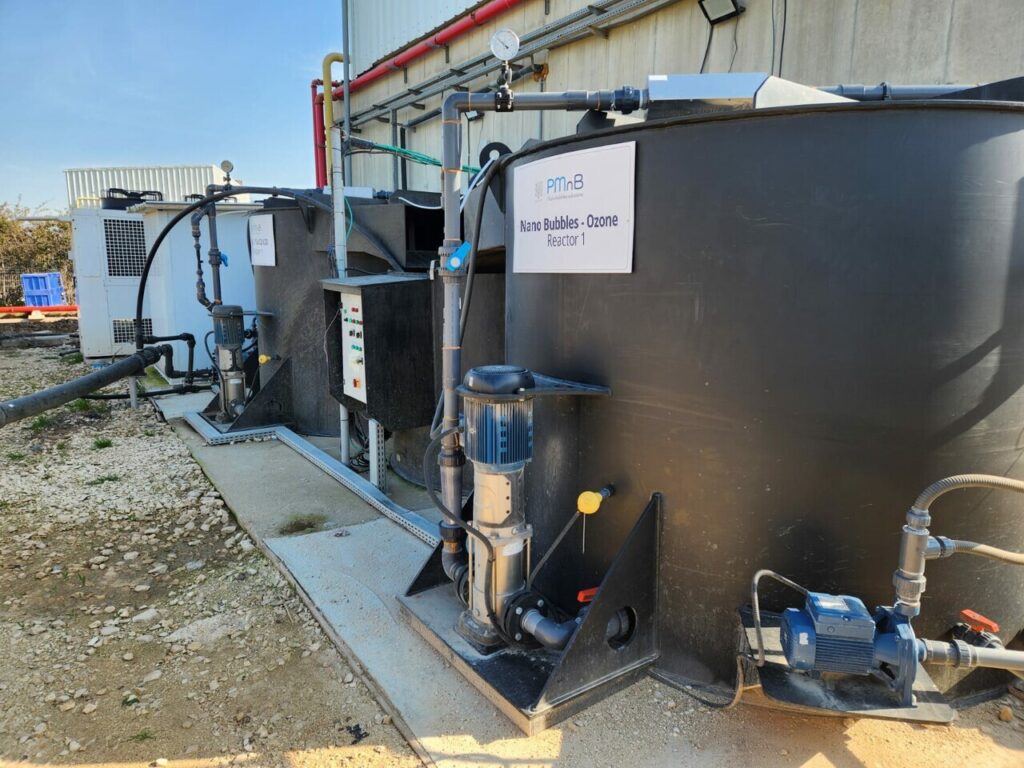
An offal slaughterhouse facility required reliable sulfide reduction to meet discharge limits. PMnB was installed after anaerobic treatment to improve oxidation.
A PMnB ozone nano bubble system was installed on an effluent reservoir recirculation line to improve secondary effluent quality. The reservoir had become anaerobic with poor water quality (high BOD/COD, high turbidity). PMnB ozone nano bubbles restored oxygen levels and significantly improved effluent quality within practical operating timelines.
Severe odors from a wastewater reservoir in an industrial area caused public complaints. PMnB restored aerobic conditions across the reservoir.
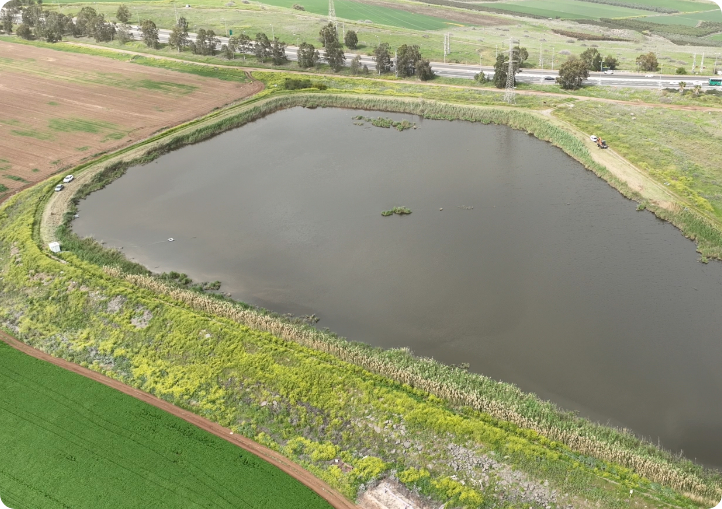
A 370,000 m³ reservoir storing tertiary-treated wastewater experienced algae growth and declining effluent quality following irregular discharge during 2023, leading to disqualification for irrigation reuse. PMnB implemented floating ozone nano bubble systems to restore oxidation efficiency, control algae, and stabilize reservoir water quality.
Systems can operate independently or alongside existing aeration and treatment technology.

Compatible with activated sludge basins and trickling filter systems
Deployable in primary treatment equalization tanks and secondary treatment reactors
No chemical storage or handling infrastructure required
Scalable across small industrial sites and large centralized treatment plants
Discuss how improved oxygen transfer and oxidation can reduce operational burden and enhance treatment reliability.


Add a differentiated, chemical-free oxidation solution backed by documented case studies and global engineering experience.

For assistance, please visit our Contact Us page.
Our dedicated team is ready to help you on your nanobubble journey.
PMnB enhances oxidation within the wastewater treatment system by delivering dissolved gases as oxygen or ozone efficiently using nano bubbles. This supports the removal of sulphides and hydrogen sulfide (H₂S), reduces odor and corrosion, and promotes the conversion of reduced sulfur compounds into stable forms such as elemental sulfur or sulfate.
Yes. By increasing dissolved oxygen availability, PMnB strengthens biological processes in activated sludge systems. Improved oxygen transfer supports more efficient organic matter breakdown and stabilizes secondary treatment performance.
PMnB is designed for retrofit into existing treatment facilities, including activated sludge basins, trickling filters, and equalization tanks. Integration requires minimal disruption and does not involve chemical storage or dosing systems.
Yes. Industrial wastewater treatment systems frequently experience variable organic loads, influent quality. By improving oxygen transfer efficiency and sustaining oxidation within the basin or reactor, PMnB helps stabilize biological processes during changing conditions. In documented industrial deployments, nano bubble oxidation maintained stable sulphide removal and aerobic treatment performance during high-load events.
Installation location depends on the primary performance limitation within the wastewater treatment system. PMnB is commonly integrated post the anaerobic digestore, before the activated sludge basins, trickling filter recirculation loops, or in sludge treatment zones. The system enhances existing biological and oxidation processes rather than replacing core infrastructure. A site-specific assessment determines optimal placement based on influent characteristics, hydrogen sulfide (H₂S) levels, organic matter concentration, and overall treatment plant configuration.