Well Water Treatment Using Chemical-Free Nano Bubble Technology
PMnB delivers advanced well water treatment solutions that improve groundwater quality, reduce contaminants, and support safe drinking water supply from wells. By improving oxidation efficiency and oxygen availability in groundwater systems, PMnB supports more stable well water treatment systems while reducing reliance on chemical dosing or complex filtration infrastructure.
Groundwater is often considered a reliable water source, but untreated wells frequently contain contaminants that affect drinking water safety, taste, and system performance.
Hydrogen sulfide causing rotten egg smell and odor complaints
Dissolved iron and manganese impacting water quality and staining fixtures
Biofilm growth and bacteria affecting drinking water safety
Variable contaminant levels that require targeted water filtration systems
Dependence on chemical dosing or multiple filter systems to maintain acceptable water quality
How PMnB improves well water treatment performance
PMnB improves water treatment for wells by delivering dissolved gases such as ozone, oxygen, and air using stable nano bubbles. Unlike conventional bubbles that quickly rise and escape, nano bubbles remain suspended in water for extended periods. This improves oxidation efficiency, reduces contaminants and improves overall water quality before filtration.
Up to
0%
sulfide oxidation
<
0%
Hydrogen sulfide after treatment
0m³/h
Well production restored
Applications across well water treatment systems
Hydrogen sulfide removal
PMnB oxidizes dissolved sulfides efficiently using ozone or oxygen nano bubbles.
Eliminates rotten egg smell in well water
Converts sulfide to sulfate for easier removal
Improves downstream water filter systems
Iron and manganese oxidation
PMnB improves oxidation prior to filtration, enabling conventional filter systems to remove these contaminants more effectively.
Improved iron and manganese oxidation
Reduced fouling of water filtration systems
Cleaner water entering household or municipal water systems
Pre-treatment for filtration systems
Many well water treatment systems rely on carbon filters, reverse osmosis, or other filtration technologies. PMnB improves oxidation upstream, improving flocculation pre-filtration processes.
Coagulation entering water before filtration systems
Reduced loading on water filter systems
Improved overall water quality
Well water case studies
Well water
Potable water
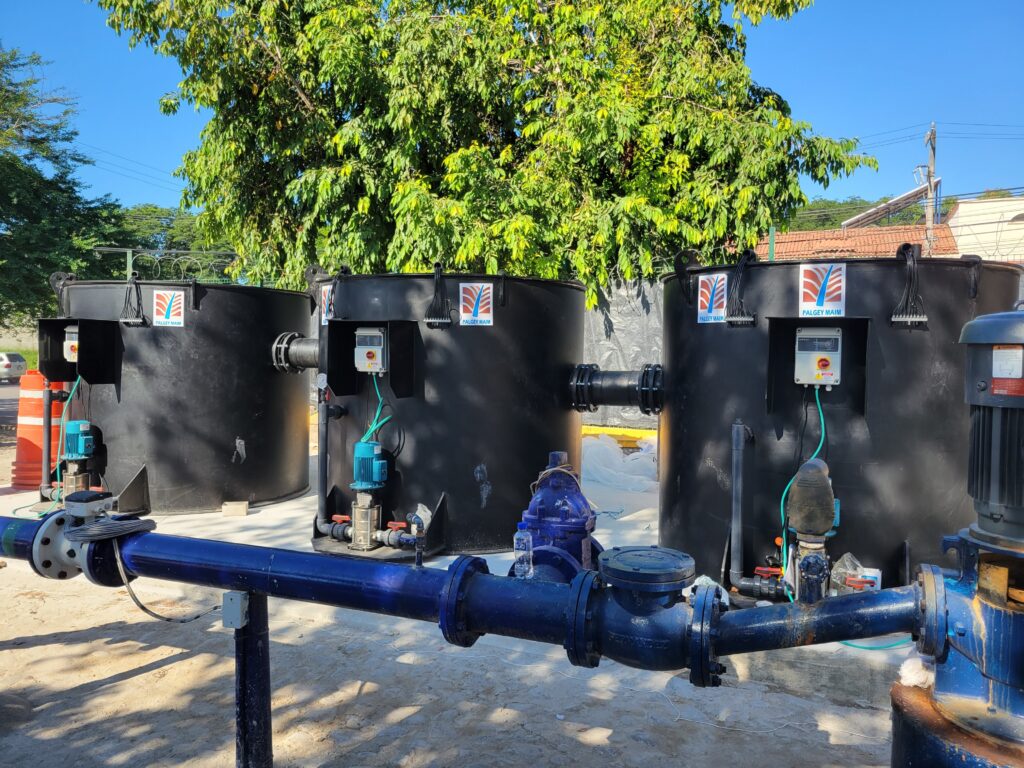
Iron and Manganese removal from wells, Mexico
High iron and manganese levels had taken critical drinking water wells out of service. PMnB applied ozone nano bubble oxidation with sand filtration to restore well operation without chlorination infrastructure.
Results
Effective iron and manganese removal
Wells restored at 144 m³/h (40 L/s)
Improved potable water quality without chlorination
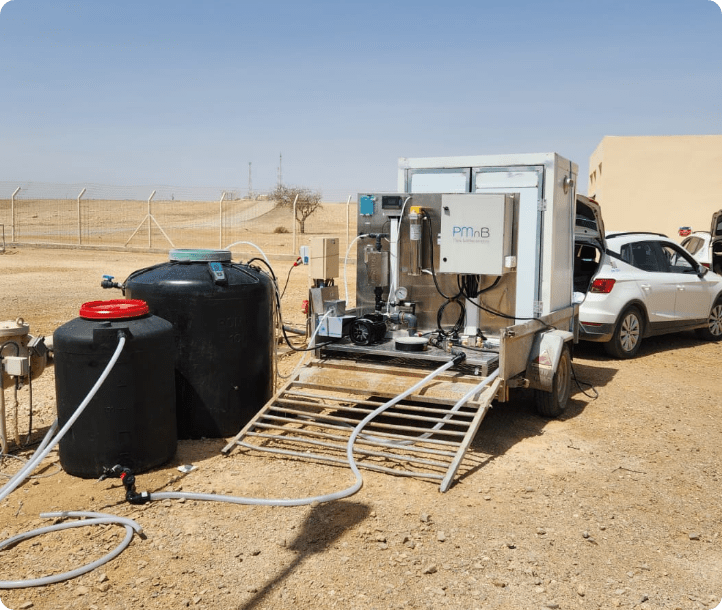
High dissolved sulfide (H₂S) levels caused odor, turbidity, and water quality issues in groundwater wells. In this pilot project, Palgey Maim’s PMnB nano bubble oxidation was evaluated using air, pure oxygen, and ozone under real field conditions to assess chemical-free sulfide removal at practical retention times (~pH 7).
Results
>90% sulfide removal achieved using ozone nano bubbles (air/oxygen ~60%)
Low outlet turbidity, indicating oxidation to sulfate rather than sulfur formation
Ozone outperformed air and pure oxygen; >2 g O₃ per g sulfide required for >90% removal
PMnB well water treatment systems are designed for simple integration into existing groundwater infrastructure. Systems can be installed:
Upstream of water filtration systems
Before sand filters, carbon filters, or reverse osmosis units
In municipal groundwater treatment plants
In agricultural or industrial well supply systems
Environmental and operational benefits
Chemical-free oxidation using dissolved gases such as ozone, oxygen, and air
Reduced reliance on chlorine or other chemical dosing
Improved drinking water quality from groundwater sources
Lower maintenance requirements for water filter systems
A simpler approach to well water treatment
Speak with a PMnB engineer to evaluate your well water treatment challenges and identify opportunities to improve groundwater quality, reduce contaminants, and stabilize filtration performance.
Expand your portfolio with advanced well water treatment systems powered by nano bubble technology.PMnB provides partners with proven engineering, global project experience, and chemical-free treatment solutions for groundwater applications.
For assistance, please visit our Contact Us page. Our dedicated team is ready to help you on your nanobubble journey.
What is well water treatment?
Well water treatment refers to processes used to improve groundwater quality so it can be safely used for drinking, irrigation, or industrial purposes. Treatment typically removes contaminants such as iron, manganese, hydrogen sulfide, bacteria, and other specific contaminants that affect water quality.
Why does well water sometimes smell like rotten eggs?
A rotten egg smell in well water is usually caused by hydrogen sulfide gas. This compound forms naturally in groundwater and can produce strong odors even at low concentrations. Effective well water treatment systems oxidize hydrogen sulfide so it can be removed by filtration.
What contaminants are common in well water?
Common well water contaminants include hydrogen sulfide, iron, manganese, nitrates, and dissolved organic matter. A water test is typically required to identify specific contaminants and determine the most appropriate water filtration system.
How do well water filtration systems work?
Most contaminate well water filtration systems combine oxidation and filtration. Oxidation converts dissolved contaminants into particles that can be removed by filter systems, such as sand filters, carbon filters, or membrane filtration technologies like reverse osmosis.
Can well water be made safe for drinking?
Yes. With proper well water treatment systems, groundwater can be treated to meet drinking water standards. Treatment may include oxidation, filtration, disinfection, and additional water filter systems depending on the contaminants present.
We use cookies to improve your experience, understand site performance, and help you find the most relevant information. By continuing to browse, you agree to our use of cookies.