Fact-checked against Directive (EU) 2024/3019 (November 2024) and EU Council press release, November 5, 2024.
By 2045, the European Union expects its urban wastewater and sewage treatment sector to be energy-neutral, producing at least as much renewable energy as its water utilities consume in order to deliver clean water.
The target comes from Article 11 of the revised Urban Wastewater Treatment Directive (Directive (EU) 2024/3019) and applies to treatment plants handling a load of 10,000 population equivalents (p.e.) or more, together with their connected collecting systems.
This directive exists for two reasons. First, treating wastewater is energy-intensive, and a large share of that energy goes into supplying oxygen to the treatment process. Second, the sector is expected to help deliver the EU’s 2050 climate-neutrality goal. Water management at scale demands efficient use of resources, and Article 11 makes energy neutrality the binding mechanism to achieve that efficiency.
What is the EU energy neutrality target?
The energy neutrality target is set out in Article 11 of Directive (EU) 2024/3019, the 2024 recast of the EU’s original 1991 Urban Wastewater Treatment Directive. In principle, it requires that the energy consumed by urban wastewater treatment plants treating 10,000 p.e. or more (including their connected collecting systems) should not exceed the renewable energy generated on their behalf. The deadline to reach that balance is the end of 2045.
The target applies at national level, not plant by plant. Member States are responsible for the sector reaching neutrality as a whole, which means an individual plant is not legally required to generate all of its own energy on-site. A country can let plants with strong biogas or solar potential over-produce to offset sites where on-site generation is impractical. Renewable energy counts whether it is produced on-site or off-site, and whether generated by the plant’s owner or operator or on their behalf.
That flexibility shapes where investment tends to flow first: toward the plants and measures that deliver the most renewable energy, or the largest energy savings, per euro spent.
Does this apply to my plant?
The energy neutrality target is tied to plant size, measured in population equivalents (p.e.), a standard way of expressing pollution load. One p.e. is roughly the daily organic load (the organic matter) produced by one person, so a plant serving 10,000 p.e. handles a load equivalent to about 10,000 people (including any industrial load converted onto the same scale).
For the 2045 energy neutrality target specifically:
- 10,000 p.e. and above: your plant is counted toward the national energy neutrality target, along with its connected collecting system.
- Below 10,000 p.e.: the energy neutrality obligation does not apply to your plant, though other parts of the directive still may.
It helps to keep the energy target separate from the directive’s other size thresholds, which catch different plants for different obligations:
- 1,000 p.e. and above: now within scope for wastewater collection, primary treatment, and secondary (biological) treatment, lowered from 2,000 p.e. under the 1991 directive
- 10,000 p.e. and above: subject to the energy neutrality target, and to stricter nutrient-removal (tertiary) or micropollutant-removal (quaternary) requirements where the plant discharges into a sensitive or at-risk area.
- 150,000 p.e. and above: the largest plants, which face the earliest and most stringent treatment obligations across the board.
Because energy neutrality is a national-level target, being above 10,000 p.e. means your plant is counted toward your country’s obligation. It does not mean that your specific site must reach neutrality on its own. How that responsibility is shared out will be decided during national transposition, which Member States must complete by 31 July 2027.
How the target will be phased in
Energy neutrality is not a single 2045 switch. It ramps up through interim targets. Here are the key dates:
| Deadline | Milestone | Applies to |
| 31 Jul 2027 | Directive transposed into national law | All Member States |
| 31 Dec 2027 | National lists of eutrophication-sensitive areas published | Member States |
| 31 Dec 2028 | First mandatory energy audit | Plants ≥100,000 p.e. (+ connected collecting systems) |
| 31 Dec 2030 | Interim energy target: ≥20% of energy from self-generated renewables · micropollutant-risk-area lists published | Plants ≥10,000 p.e. (national total) |
| 31 Dec 2032 | First mandatory energy audit | Plants 10,000–100,000 p.e. (+ connected systems) |
| 31 Dec 2035 | Interim energy target: ≥40% | Plants ≥10,000 p.e. (national total) |
| 31 Dec 2039 | Tertiary (nutrient) treatment fully in place · quaternary treatment well underway | Plants ≥150,000 p.e. |
| 31 Dec 2040 | Interim energy target: ≥70% | Plants ≥10,000 p.e. (national total) |
| 31 Dec 2045 | Full energy neutrality (100%) · tertiary and quaternary treatment fully phased in | Pla |
Two ways plants can reach energy neutrality
Reaching energy neutrality comes down to two levers. A plant can use less energy, or it can produce more renewable energy. In most cases, cutting demand is the faster and cheaper place to start, because the cheapest kilowatt-hour is the one a plant never has to generate or buy.
Reduced energy: the demand side of the equation
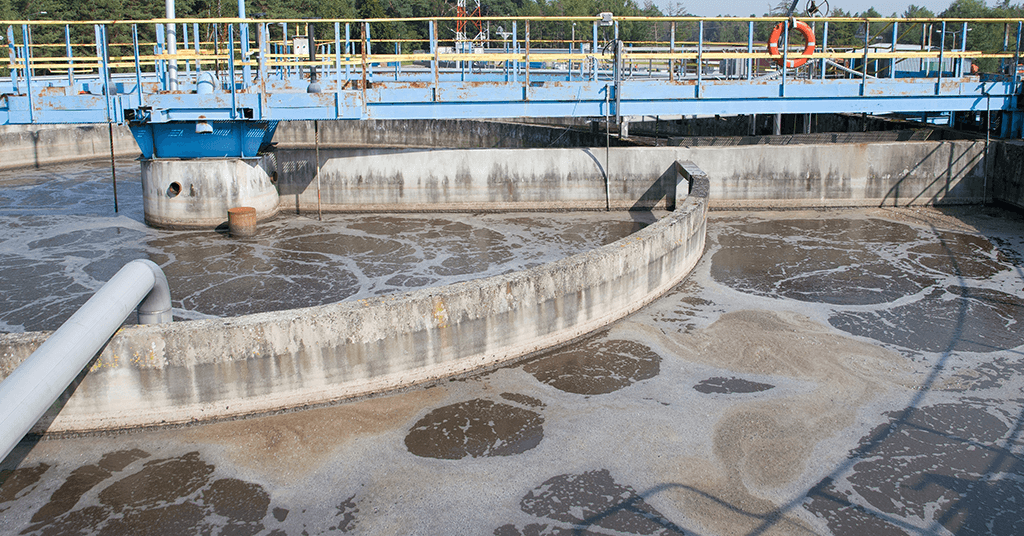
Aeration is the obvious target, because in most sewage treatment plants, it is the single largest consumer of electricity. It commonly accounts for around half of total energy use and often more, depending on the process, the plant’s size, and the condition of its blowers and diffusers.
Because aeration is such a large and constant load, small efficiency gains compound into large savings. Common measures include:
- Tuning dissolved-oxygen control so the plant stops over-aerating at low load
- Upgrading or resizing blowers
- Improving how oxygen is transferred into the water.
Many of these steps are lower-capex than building new generation capacity, and they cut the bill from day one rather than after a multi-year construction project.
Gains in oxygen-transfer efficiency can also reduce energy consumption
Nanobubble technology supplies oxygen to the biological process using far smaller bubbles than conventional fine-bubble diffusers, which raises gas-transfer efficiency and can reduce the energy needed for aeration. It supports the biological process rather than replacing it, and it sits within the demand-reduction category as one option a plant can evaluate.
Increasing renewable energy production
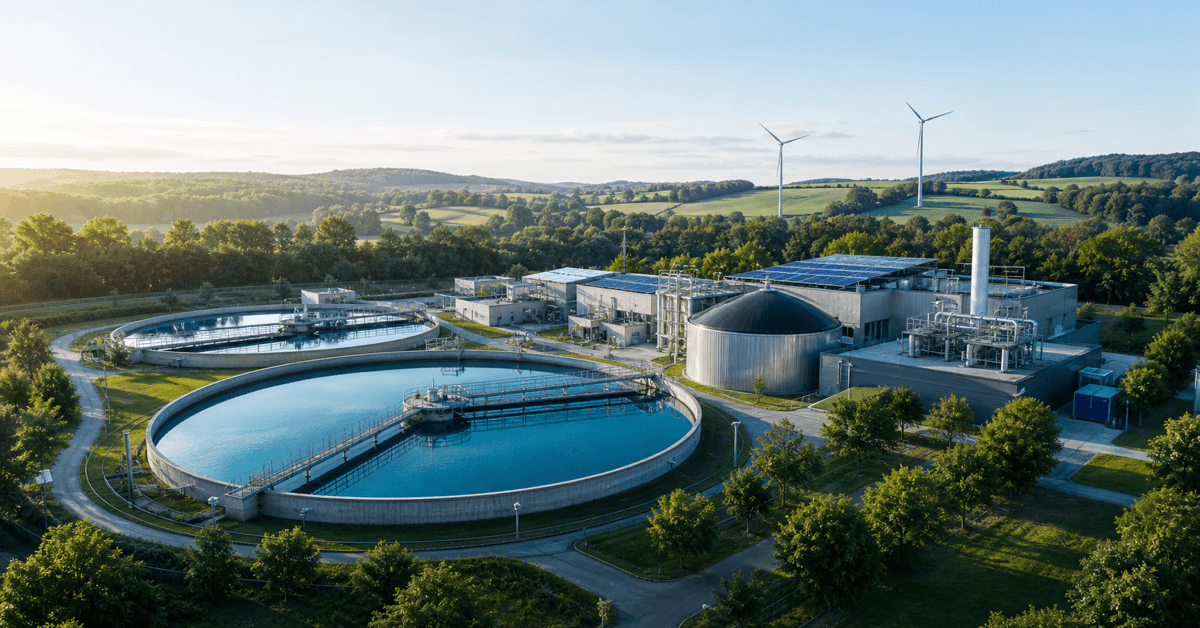
The second lever is generating renewable energy the plant can count toward its target. The directive recognises several sources, whether produced on-site or off-site by the plant’s owner or operator: solar, wind, hydraulic, thermal, and biogas.
Two of these are especially relevant to treatment plants:
- Biogas from anaerobic digestion of sludge lets a plant turn its own waste stream into energy.
- Solar makes use of the large surface areas many plants already have (heat recovery from treated effluent is a further option).
The interim targets of 20, 40, 70, and 100% count only renewable energy the plant generates itself. Purchased grid electricity, even if renewable, does not count toward them. There is a narrow exception, but it applies only at the final stage. If a Member State cannot reach the 2045 target despite implementing every efficiency and generation measure available, it may allow up to 35% of the final target to be met with purchased non-fossil energy. This is a last-resort derogation, not a shortcut, and it does not apply to the earlier milestones.
Why aeration efficiency matters more than it gets credit for
The 2045 target is easy to read as a generation problem. The intuitive assumption is that a plant reaches neutrality by building solar arrays and biogas capacity until production matches consumption. That reading misses half the picture, and it’s the more valuable half.
The target is defined as a ratio. Article 11 requires that renewable energy generated reaches a set percentage of total energy used. Both numbers can move, which gives a plant two ways to close the gap:
- Raise the top of the fraction by generating more renewable energy.
- Lower the bottom by consuming less energy in the first place.
The second option is the one that gets less attention. Every unit of demand a plant removes is a unit it no longer has to generate renewably to stay compliant. Efficiency therefore counts twice. It cuts the energy bill, and it shrinks the target the plant has to hit in the first place.
Gains in aeration efficiency can drastically improve the energy picture
Aeration is typically the largest single electricity load at a treatment plant, often around half of total use. This is one of the few operational costs that a plant can realistically reduce. The last major efficiency gain in oxygen supply came roughly three decades ago, with the shift to fine-bubble diffusers, and much of the industry’s efficiency effort since has focused on transferring oxygen into the water more effectively. A percentage saved on aeration flows straight through to the neutrality calculation on both sides.
There’s a practical timing argument as well. Demand-reduction measures such as dissolved-oxygen control, blower optimisation, and improved oxygen transfer are generally faster and less capital-intensive to deploy than new generation infrastructure. Building a digester or a solar installation is a multi-year, high-capex project. But tuning how a plant uses energy can begin far sooner and start paying back almost immediately.
Of course, this does not remove the need to generate renewable energy. Reaching 100% will require both levers for almost every plant. The point is one of sequence and emphasis. Cutting demand first makes the generation task smaller, cheaper, and more achievable, which is exactly why efficiency deserves more attention than it usually gets.
What wastewater treatment plants and water utilities should do now
The 2045 deadline feels far off, but the decisions that determine whether a plant meets it are not. Treatment assets have long lifecycles, and the first compliance milestones arrive within a few years. Here is where the near-term effort is best spent.
Track your national transposition
The directive sets the framework, but the specific obligations that will apply to your plant are decided at Member State level, and countries must transpose the rules into national law by 31 July 2027. That transposition will determine how the national energy-neutrality target is shared out across plants. Follow it closely, because it turns a sector-level target into your plant’s actual requirement.
Prepare for your energy audit
Mandatory audits are the practical starting point for compliance, and the first deadlines are close. Plants of 100,000 p.e. and above must complete their first audit by the end of 2028, and plants between 10,000 and 100,000 p.e. by the end of 2032. The audit is where a plant first has to quantify where its energy goes, so treating it as a genuine baseline rather than a box-ticking exercise sets up every decision that follows.
Benchmark your aeration energy now
You do not need to wait for the formal audit to start measuring. Because aeration is usually the largest single energy load, understanding how much energy it consumes, and how that varies with load through the day, is the single most useful dataset a plant can build. It reveals where the easy savings are and gives you a baseline to measure improvements against.
Evaluate demand-reduction options before committing to generation
New renewable generation is capital-intensive and slow to build, so it makes sense to understand your efficiency potential first. Measures such as dissolved-oxygen control, blower optimisation, and improved oxygen transfer can often deploy sooner and at lower cost. Sizing these opportunities early means any generation you do build is sized to a plant that has already cut its demand, rather than to its current, higher consumption.
These steps front-load the cheapest and fastest wins, and they ensure the expensive, long-lead investments are made against an accurate picture of what the plant actually needs.
Frequently Asked Questions
The efficient path to 2045
Energy neutrality by 2045 is a long-term target. The cheapest path to it starts with the demand side, and the demand side starts with aeration. Plants that benchmark their aeration energy early and reduce it before building new generation will reach neutrality faster and at lower cost. At PMnB, we work on the oxygen-transfer side of that equation, and we’re glad to talk through where nanobubble technology might fit a plant’s efficiency plans.
Contact us to discuss your plant’s path to more energy-neutral delivery of clean water.