Extensive wastewater treatment uses natural biological and physical processes in large, low-energy systems to treat wastewater with relatively little mechanical intervention. Instead of relying primarily on intensive aeration, complex equipment or continuous chemical dosing, these systems use land and longer treatment times to support processes that occur naturally. Common examples include wastewater lagoons, constructed wetlands and filtration systems.
This makes extensive treatment particularly relevant for smaller communities and sites where land is available and operational simplicity is a priority. The systems differ significantly in how they work, how much space they require and the level of operator input involved, but they share the same general principle: using natural treatment processes to reduce the need for energy- and equipment-intensive operation.
What makes a wastewater treatment system “extensive”?
Extensive wastewater treatment is defined less by a single technology than by the way treatment is achieved. These systems generally operate at a lower organic loading rate, allow wastewater to remain in the treatment process for longer periods and rely heavily on biological activity, settling, filtration process and other naturally occurring processes.
As a result, extensive systems typically require more land than intensive wastewater treatment technologies. In return, they can reduce the need for mechanical equipment, energy input and day-to-day operational intervention. The balance between land and treatment time on one side, and energy and machinery on the other, is one of the clearest ways to understand the distinction.
Extensive vs. intensive wastewater treatment
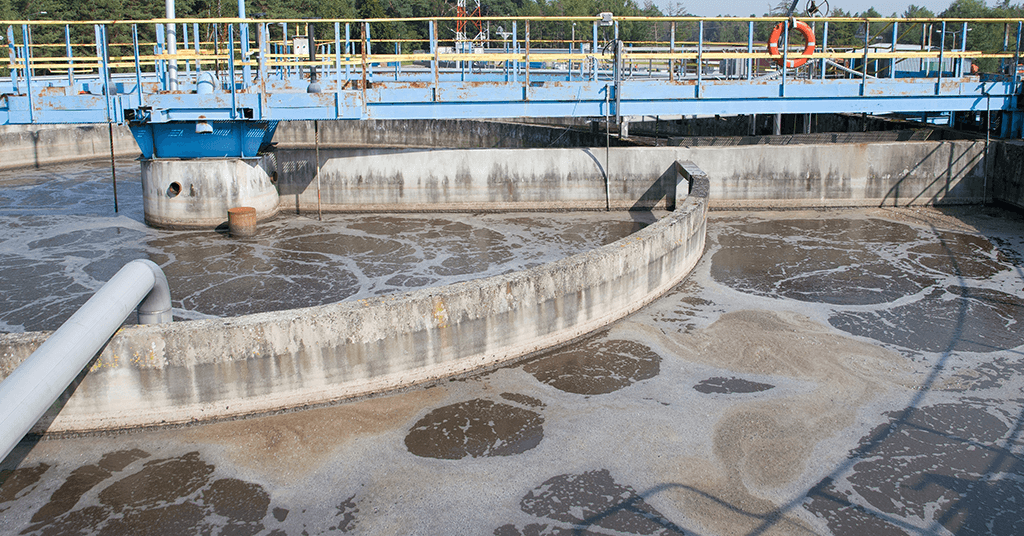
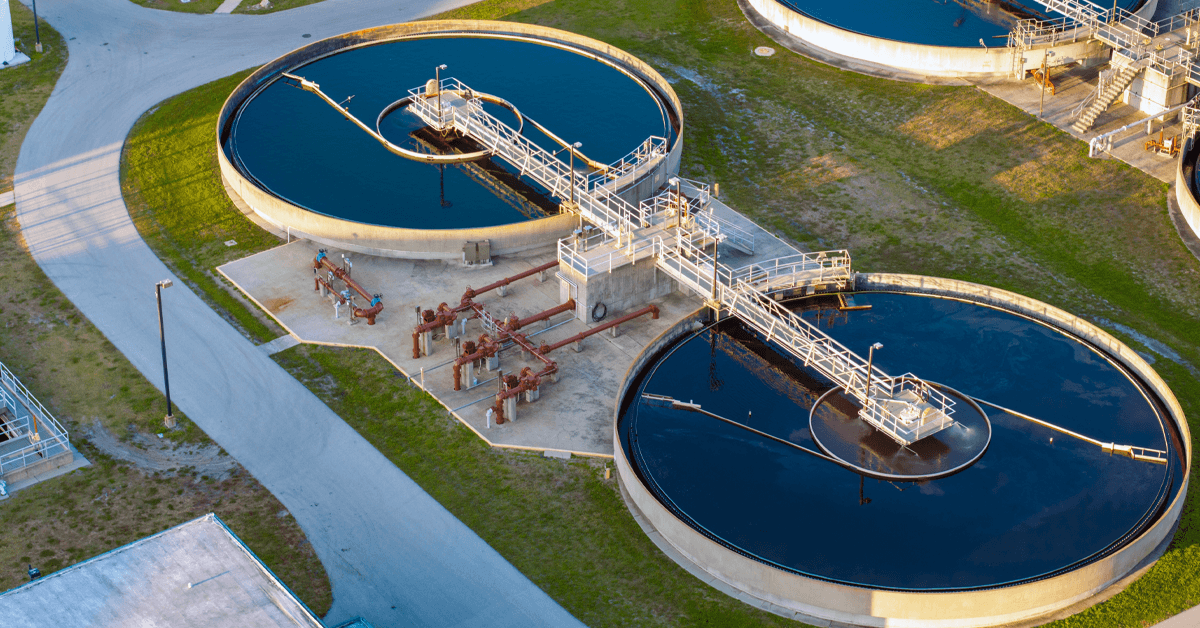
Intensive systems, such as activated sludge processes, are designed to accelerate treatment within a relatively compact footprint. They use equipment such as blowers, pumps and mechanical aeration systems to maintain the conditions microorganisms need to break down organic matter.
Extensive systems take a different approach. Lagoons, wetlands and some filtration systems provide more space and time for biological and physical treatment processes to occur. This can make them comparatively simple to operate, although their larger footprint and dependence on local operating conditions mean they are not suitable for every site.
What makes a treatment system “extensive”?
“Extensive” wastewater treatment does not describe one specific technology. It describes an approach that relies more heavily on natural biological and physical processes, longer treatment times and lower mechanical input.
Compared with intensive systems, extensive treatment generally uses more land and operates at lower loading rates. In return, it can reduce the need for continuous aeration, complex equipment and intensive day-to-day operation.
Extensive vs. intensive wastewater treatment
The main difference comes down to how quickly and intensively the treatment process is driven.
- Intensive systems, such as activated sludge, use mechanical aeration, pumps and other equipment to create the conditions microorganisms need to treat wastewater within a relatively compact footprint.
- Extensive systems give those processes more space and time. Lagoons, constructed wetlands and some filter systems rely more on retention time, settling, filtration, microbial activity and natural oxygen transfer.
That creates a useful trade-off: extensive treatment generally exchanges land and time for lower energy and mechanical complexity. It is not automatically the better or simpler option in every setting, but where space is available and treatment conditions are suitable, it can offer a practical alternative to more equipment-intensive processes.
Lagoon wastewater treatment: waste stabilization ponds
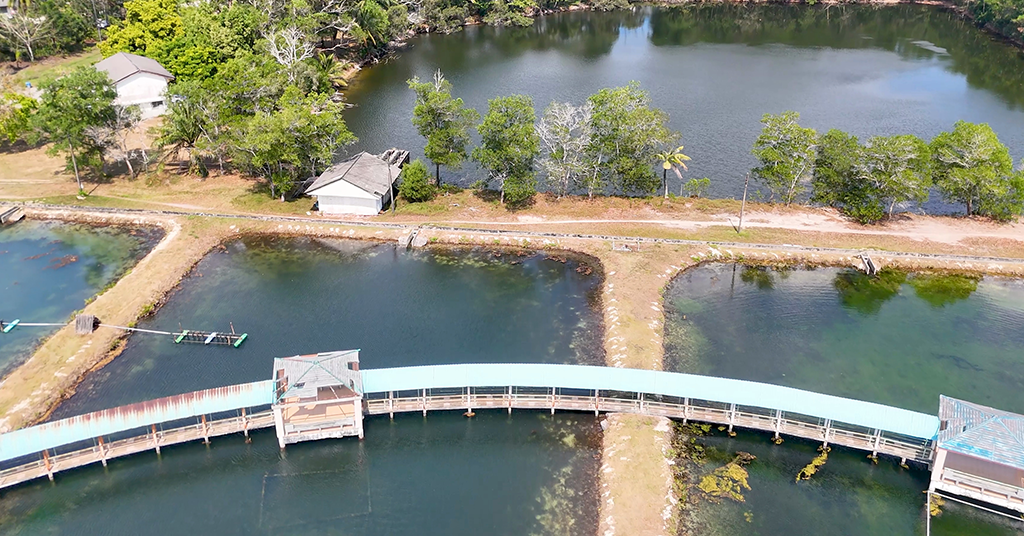
Lagoon wastewater treatment systems use large, shallow basins that hold wastewater long enough for biological treatment and natural oxygen-transfer processes to take place. A lagoon system may use several ponds in sequence, with each stage performing a different treatment function. Through these stages, the system breaks down organic matter and progressively polishes the effluent before discharging it.
Anaerobic, facultative and maturation ponds
A typical waste stabilisation pond system can include anaerobic, facultative and maturation ponds arranged in series.
Anaerobic ponds
Anaerobic ponds are generally the first stage. They are deeper, designed to receive wastewater with a relatively high organic load. In these ponds, treatment takes place largely under oxygen-limited conditions as microorganisms break down biodegradable organic matter.
Facultative ponds
Facultative ponds provide the next stage of treatment. They combine aerobic and anaerobic biological activity, with more oxygen available near the surface and lower-oxygen conditions deeper in the pond.
Some lagoon systems use mechanical aeration to increase oxygen availability. These aerated lagoons use blowers or other aeration equipment to support aerobic biological treatment.
Maturation ponds
Maturation ponds are typically shallower and are used as a final polishing stage. Their role is to improve effluent quality further before the treated water is discharged, reused or sent to another treatment process.
Across the pond train, the treatment environment changes as the organic load decreases and oxygen availability generally increases.
What lagoons need to work well
Lagoon performance depends on more than simply providing a basin and allowing wastewater to sit. The system needs sufficient land and hydraulic retention time, while organic loading must remain within the range the biological process can handle. Environmental conditions like temperature can also influence biological treatment rates.
When these conditions are properly managed, lagoon systems can provide relatively simple wastewater treatment with limited mechanical infrastructure. Their main constraint is the amount of land and treatment time they require.
Constructed wetlands
Constructed wetlands use a combination of vegetation, filter media, microorganisms and water flow to treat wastewater in a controlled environment that mimics natural wetlands. Rather than relying on intensive mechanical aeration, treatment takes place as wastewater moves through planted beds and comes into contact with the root zone and surrounding substrate.
This helps to filter suspended material, while microorganisms attached to the substrate and plant roots break down organic matter, contributing to nutrient transformation.
Horizontal and vertical flow systems
Constructed wetlands are commonly designed as either horizontal-flow or vertical-flow systems.
- In horizontal flow constructed wetlands (HFCWs), wastewater moves laterally through the treatment bed. This keeps the water in close contact with the substrate and microbial community as it travels through the system.
- In vertical-flow constructed wetlands (VFCWs), wastewater is distributed across the surface and passes downward. Intermittent loading and drainage improve air diffusion and oxygen availability within the bed, creating conditions that support aerobic bacteria involved in breaking down organic mattern.
The main limitations are similar to other extensive systems: they require space, careful hydraulic design and conditions that allow the biological processes within the bed to remain stable.
Wastewater treatment filters: peat, sand and trickling filters
Filter-based wastewater treatment systems use a porous medium to remove suspended material and support biological treatment as wastewater passes through or over the filter bed. Different types of filters use different materials: sand, peat, gravel or another material that provides both physical filtration and a surface for microorganisms to grow.
These systems are useful as a main biological treatment stage or as a polishing step after another process.
Intermittent sand and peat filters
- Intermittent sand filters receive wastewater in controlled doses rather than as a continuous flow. As the water moves through the sand, suspended solids filter out, and microorganisms help break down organic matter. The periods between doses allow air to re-enter the filter bed, supporting aerobic treatment.
- Peat filters work on a similar principle but use peat as the filter medium. The porous material provides filtration and supports microbial activity.
Trickling filters and fixed-film systems
Trickling filters use a bed of media covered by a biological film. Wastewater is distributed over the surface, where microorganisms in the biofilm break down organic matter.
Unlike more passive sand or peat filters, trickling filters generally depend on mechanical distribution systems and controlled recirculation or pumping. This places them closer to the boundary between extensive and intensive wastewater treatment. They still rely on fixed-film biological treatment, but they require more mechanical input than many lagoon or wetland systems.
Where very high-quality treated water is required, extensive systems may form part of a broader treatment train alongside more intensive technologies such as membrane filtration or reverse osmosis
Choosing the right system for a small community
There is no single extensive wastewater treatment system that works best for every small community. The right choice depends on practical site conditions: available land, discharge requirements, wastewater variability, climate and how much operator attention the system can support.
Start with the site constraints
A few questions usually shape the decision:
- How much land is available? Lagoons and constructed wetlands generally need more space, while filter-based and fixed-film systems can fit into a smaller footprint.
- What effluent quality is required? Tighter discharge or reuse requirements may call for extra treatment or polishing.
- What is the local climate? Temperature affects biological treatment, so design needs to reflect local conditions.
- How much operator input is realistic? Communities with limited technical staff may benefit from simpler systems with less mechanical equipment.
- How variable are flows and loads? Seasonal populations and changing wastewater loads can affect system stability.
Match the system to the setting
Where land is available, lagoon systems can offer relatively simple treatment with limited mechanical infrastructure.
Constructed wetlands can suit small communities where low-maintenance operation and landscape integration are priorities.
Sand, peat and other filter systems can be useful where space is tighter or where additional filtration is needed. Trickling filters and other fixed-film systems require more mechanical input, but can provide a useful middle ground between passive treatment and activated sludge.
The practical limitations of extensive treatment
The extensive treatment options we have looked at so far offer real advantages. They can be simple and energy-efficient, but they also come with trade-offs. These systems depend heavily on site conditions and biological stability, so they are not always the best fit where space is limited or treatment demands change quickly.
Common challenges include:
- Land availability: Lagoons and wetlands need more space than compact mechanical systems.
- Cold weather: Lower temperatures can slow biological treatment and affect seasonal performance.
- Changing loads: Sudden shifts in flow or organic loading can make it harder to maintain stable treatment conditions.
- Slow recovery: Because extensive systems rely on biological processes and longer retention times, recovery after an upset may take time.
Lagoon systems also have a well-known effluent-quality challenge: microalgae can contribute to suspended solids in the treated water. Even when organic treatment is working well, algal biomass leaving the lagoon can raise TSS and create problems where tighter discharge or reuse requirements apply.
These limitations do not make extensive treatment ineffective. They simply mean that site conditions, loading patterns and final effluent requirements need to be considered carefully during system selection and design.
Extensive treatment and the 2035 EU deadline
The regulatory context is changing for smaller wastewater systems in Europe. Under the recast EU Urban Wastewater Treatment Directive, agglomerations of 1,000 population equivalent and above fall within the Directive’s expanded scope, with secondary treatment requirements applying by 31 December 2035 to the newly covered smaller agglomerations.
The Directive also highlights why smaller systems matter for the production of clean water. Citing a 2018 European Environment Agency report, it states that small agglomerations place significant pressure on 11% of EU surface water bodies.
As the 2035 deadline approaches, operators of smaller systems will need to assess whether their existing treatment processes can meet those requirements consistently and where improvements may be needed.
The right system starts with the site
Extensive wastewater treatment uses land, time and natural treatment processes to reduce reliance on energy-intensive equipment and continuous mechanical intervention. Lagoons, constructed wetlands and filter systems each work differently, but all can offer practical treatment options where site conditions, available space and effluent requirements are a good fit.
For small communities in particular, the right choice comes down to balancing treatment performance with land, climate, operational capacity and long-term reliability.