


Reservoir Effluent Treatment, Israel
Municipal wastewater
Lagoons & reservoirs
Agriculture & irrigation
Restoring effluent quality and regulatory compliance with ultra-low energy demand
Following upgrades at an existing Wastewater Treatment Plant (WWTP), effluent quality discharged to the irrigation reservoir no longer met required standards. PMnB nano bubble systems were installed directly in the reservoir to complete treatment, restore compliance, and significantly reduce energy consumption.
The challenge
Effluent quality degradation following WWTP upgrades
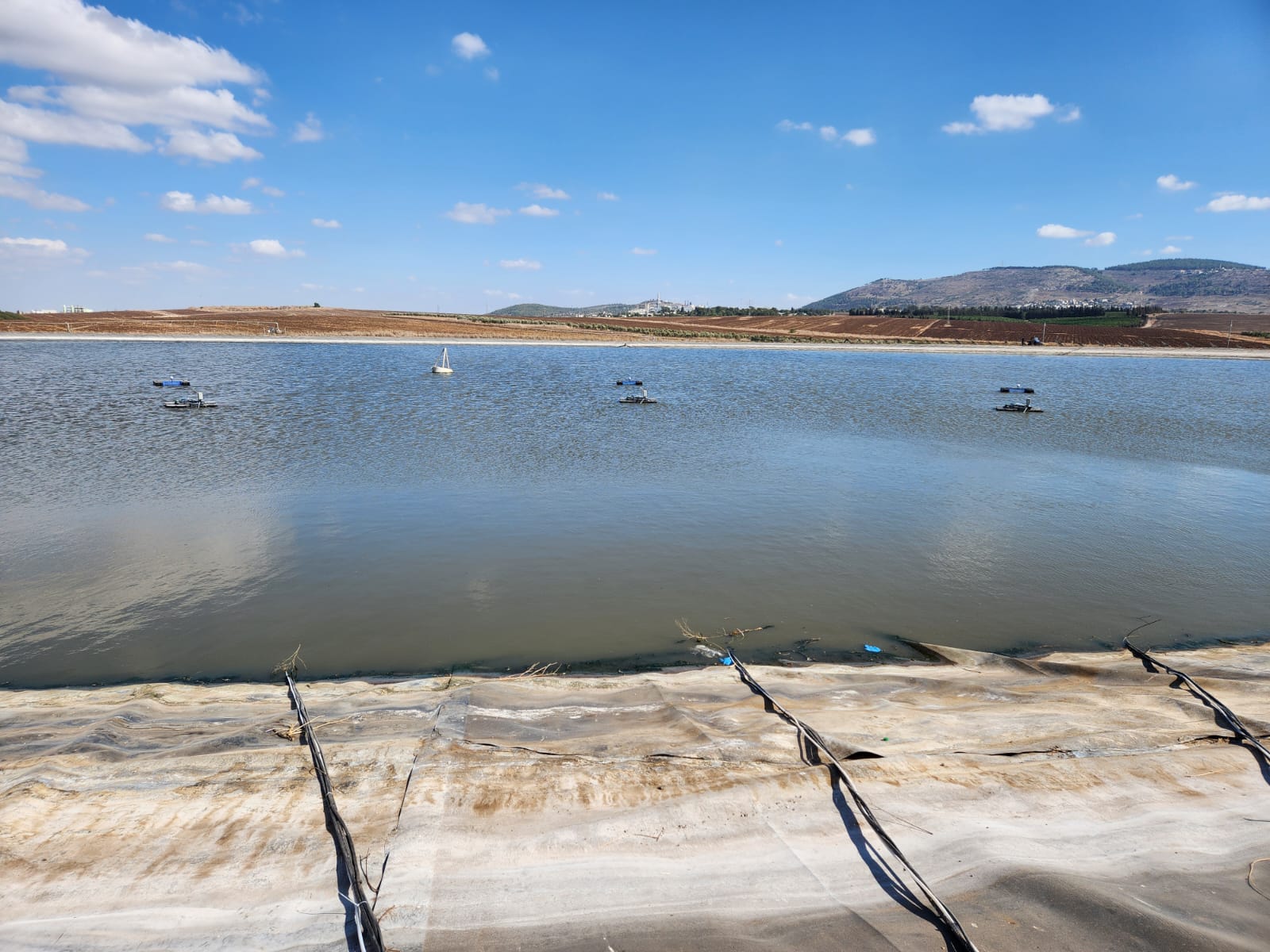
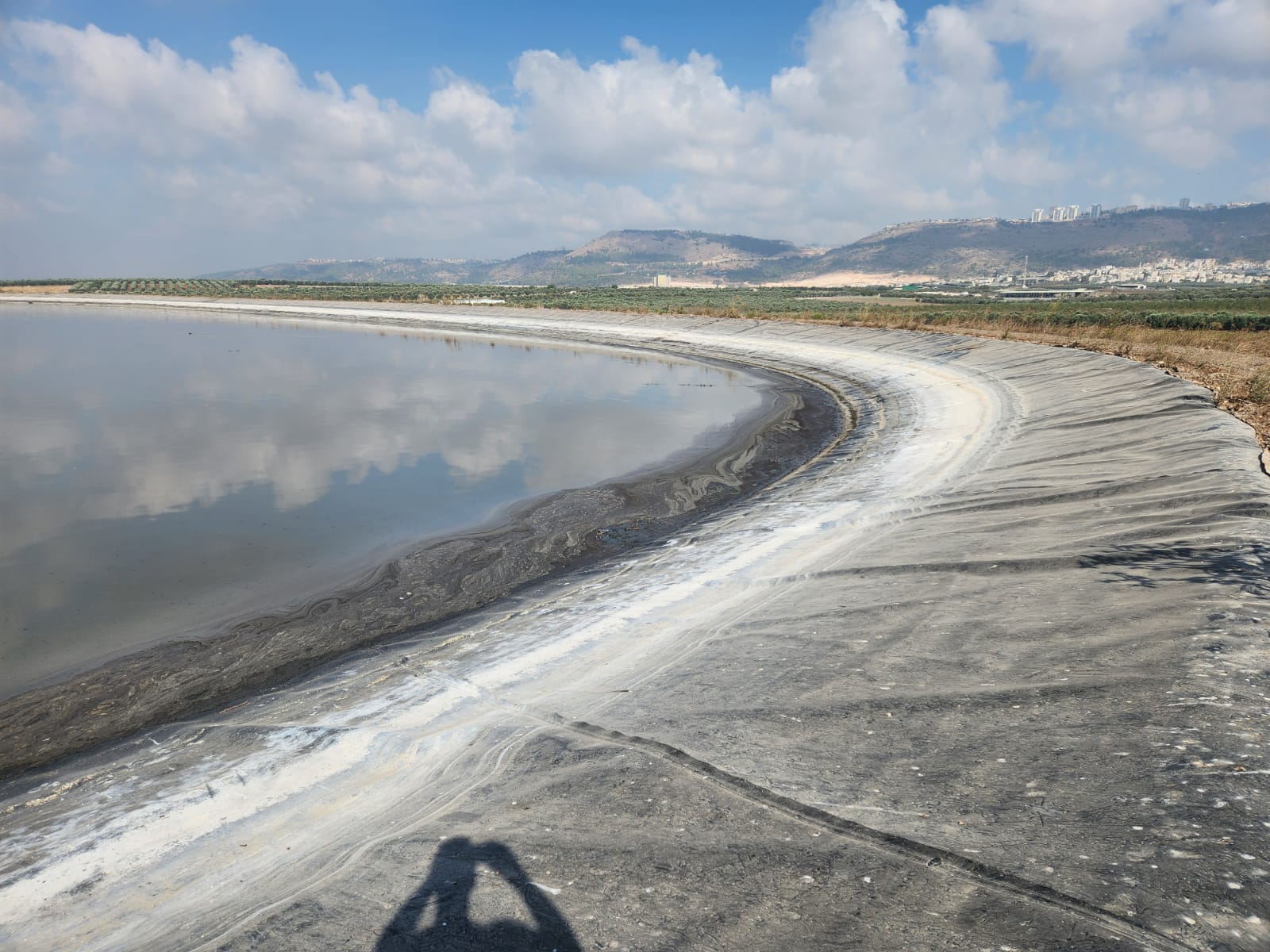
The reservoir has a volume of approximately 390,000 m³ and receives mixed liquid from the WWTP, which treats around 8,500 m³/day.
As part of an upgrade project at the WWTP, treatment capacity was reduced to:
- One sedimentation basin
- One aeration basin
Following this change, effluent quality deteriorated and no longer met discharge requirements for irrigation reuse.
Mixed liquid quality at the WWTP outlet
Parameter
Average Value (mg/L)
The Ministry of Health required the effluent to be improved to a “50/60” quality standard before discharge into the irrigation reservoir.
Conventional solution considered
Surface aeration in the reservoir
Historically, completing treatment in the reservoir would require installing 6–8 surface aerators, with a combined electrical demand of approximately 160 kW.
This approach involved:
The PMnB solution
Reservoir-based treatment using nano bubble oxygenation
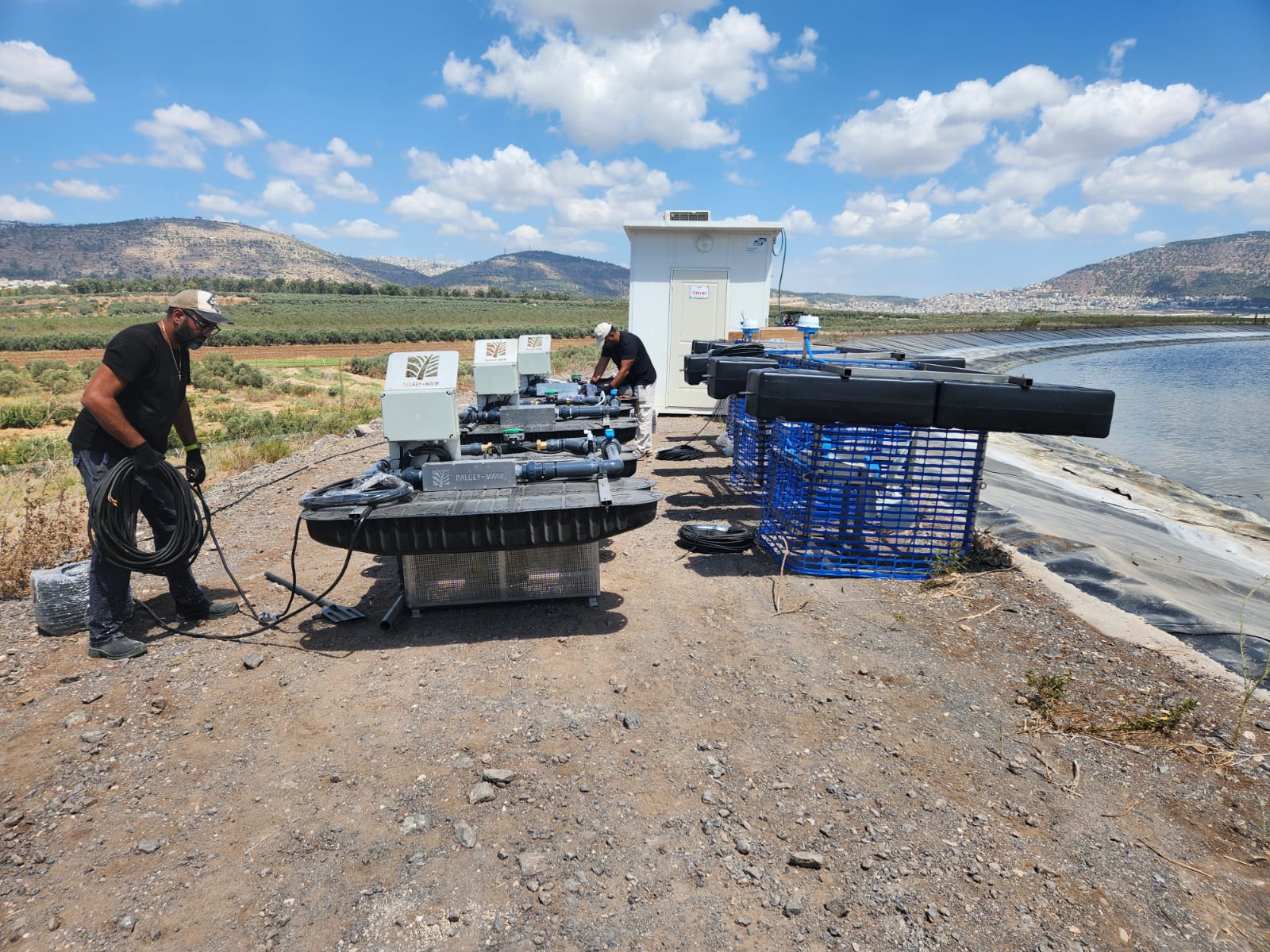
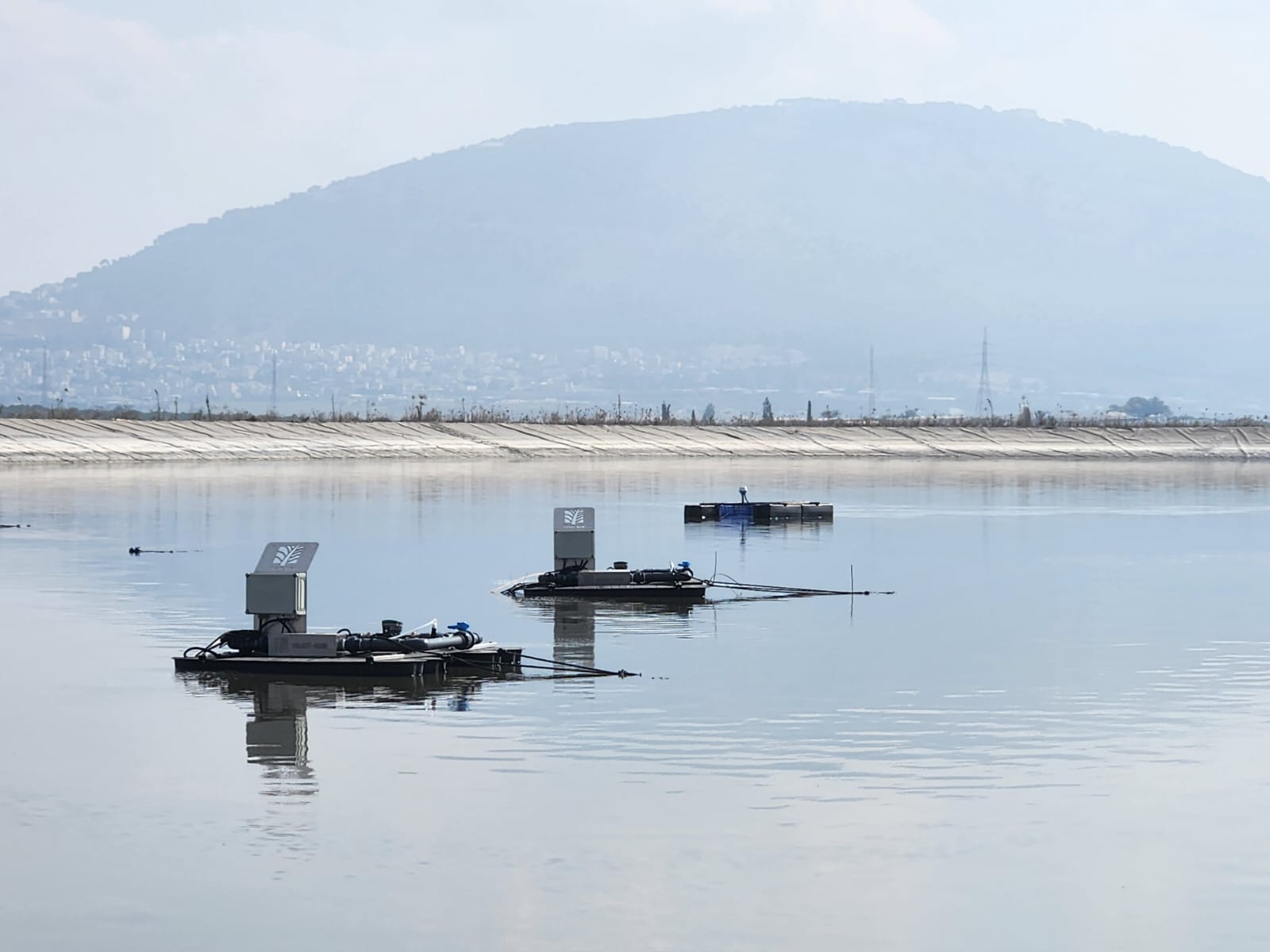
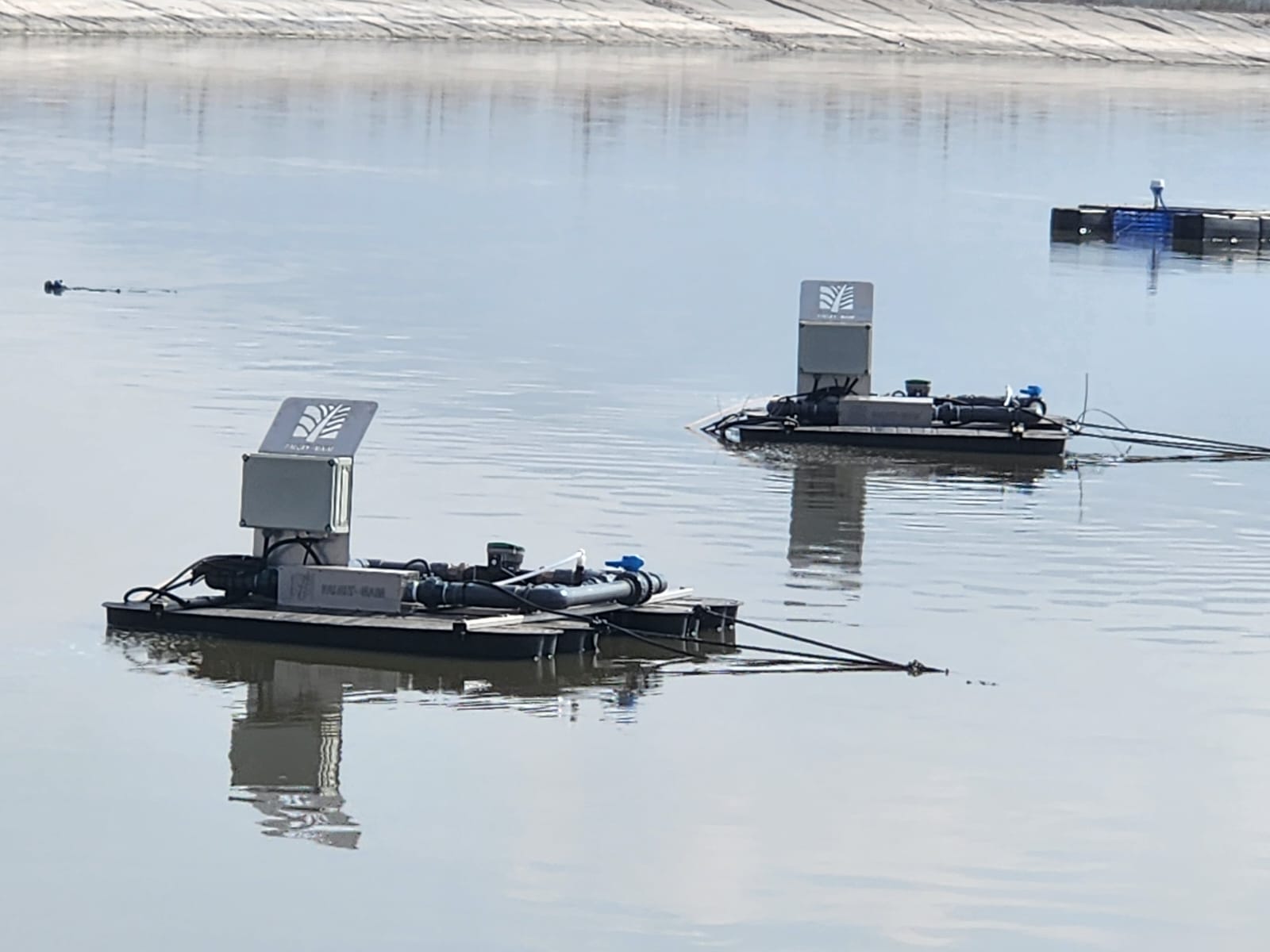
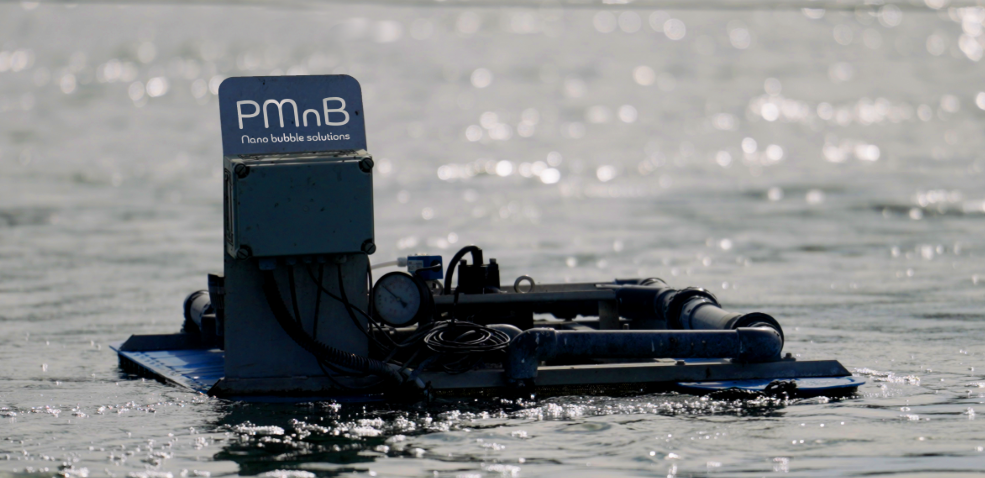
Palgey Maim installed three floating PMnB units directly in the reservoir, each supplying oxygen using nano bubble technology with local ozone generation.
The system delivers oxygen in ultra-fine bubbles (≈0.1 micron), enabling:
- Deep oxygen penetration
- Long gas residence time
- High oxidation efficiency
System configuration
- 3 floating PMnB units
- Local ozone supply
- Total installed power: 27 kW
This replaced the need for high-power surface aerators.

System performance & treatment results
System performance & treatment results
Within weeks of operation, effluent quality improved significantly across all measured parameters.
Organic load reduction
- BOD reduced from ~150–180 mg/L to <50 mg/L
- COD reduced from ~400 mg/L to <170 mg/L
Suspended solids
- TSS reduced from ~200 mg/L to <60 mg/L
- VSS reduced from ~180 mg/L to <50 mg/L
Nutrients
- Significant reduction in ammonia (NH₄)
- Reduction in total phosphorus
Ongoing improvement over time
Later measurements (October 2025) showed continued improvement:
All results met or exceeded regulatory requirements.
Energy and economic impact
Major operational and capital savings
Compared to a conventional aeration solution, the PMnB system delivered substantial financial benefits:
- ~120 kW lower power demand
- ~1,000,000 kWh annual energy savings
- Estimate annual energy cost savings: ~128,200$
Capital expenditure avoided
~96,100$ saved compared to surface aerator procurement
~64,100$ saved by avoiding new electrical infrastructure
Total projected energy savings over the interim period: ~448,700$
Outcome and conclusion
The PMnB system enabled the reservoir to function as an effective final treatment stage, ensuring:
The customer reported high satisfaction with system performance, and effluent quality continues to improve under ongoing operation.
Ready to improve municipal wastewater treatment performance?
Speak with a PMnB engineer to evaluate your treatment plant and identify opportunities to reduce energy use, improve water quality, and strengthen disinfection performance.
Partner with PMnB
A proven solution in a fast-growing market
Expand your portfolio with chemical-free water and wastewater treatment technology backed by real engineering, global validation, and partner support.
Frequently Asked Questions

Still have questions?
For assistance, please visit our Contact Us page.
Our dedicated team is ready to help you on your nanobubble journey.
How can a reservoir be used to improve municipal wastewater effluent quality?
A reservoir can be used as a final polishing stage in municipal wastewater treatment when effluent leaving the wastewater treatment plant does not yet meet reuse or discharge requirements. In this reservoir project, PMnB installed floating nano bubble oxygenation units directly in the reservoir to complete treatment, improve effluent quality, and support irrigation reuse compliance.
How do you reduce BOD and TSS in a wastewater reservoir?
BOD and TSS in a wastewater reservoir can be reduced by improving oxygen transfer and oxidation in the water. At this reservoir, PMnB’s floating nano bubble system reduced BOD by 84% and TSS by 78%, helping the stored effluent reach the required treatment standard for irrigation reuse.
What is the most energy-efficient alternative to surface aerators in wastewater reservoirs?
A nano bubble oxygenation system can be a more energy-efficient alternative to surface aerators in wastewater reservoirs. In this project, PMnB replaced a conventional surface aeration concept requiring about 160 kW with a 27 kW floating nano bubble system, significantly lowering power demand while improving effluent quality.
Can nano bubble technology help treated wastewater meet irrigation reuse standards?
Yes. Nano bubble technology can help treated wastewater meet irrigation reuse standards by improving final effluent quality in lagoons and reservoirs. In this project, PMnB’s floating reservoir treatment system improved effluent quality to meet and exceed the required regulatory targets for discharge into an irrigation reservoir.
How quickly can nano bubble treatment improve effluent quality?
Nano bubble treatment can improve effluent quality within weeks when applied correctly in reservoir-based polishing applications. At this reservoir, PMnB reported significant improvements in BOD, COD, and TSS within weeks of operation, with further improvement recorded in later measurements.
Can nano bubble systems replace surface aerators in wastewater treatment reservoirs?
In some municipal wastewater reservoir applications, nano bubble systems can replace surface aerators as the final treatment step. At this reservoir, three floating PMnB units replaced the need for 6 to 8 surface aerators, reducing energy demand, avoiding new electrical infrastructure, and shortening implementation complexity.
In some municipal wastewater reservoir applications, nano bubble systems can replace surface aerators as the final treatment step. At this reservoir, three floating PMnB units replaced the need for 6 to 8 surface aerators, reducing energy demand, avoiding new electrical infrastructure, and shortening implementation complexity.
