When choosing nanobubbles for water and wastewater treatment, the first decision is the gas. This decision is shaped by environmental engineering principles:
- Oxygen nanobubbles are best suited to applications that need ongoing dissolved oxygen, such as biological treatment and aquaculture.
- Ozone nanobubbles are better suited to targeted oxidation and disinfection. The two gases are not interchangeable.
The nanobubble itself is the delivery mechanism. Its job is to move gas into the water efficiently and keep it in contact with the water for longer. What happens next depends on the gas inside the bubble. Oxygen supports aerobic biological processes, while ozone acts as a strong oxidant and disinfectant. That distinction is the simplest way to decide which option fits the job.
Same bubble, different gas: a primer on nanobubble technology
Oxygen and ozone nanobubbles use the same basic delivery method based on extremely small gas bubbles, invisible to the naked eye. These remain suspended in water longer than ordinary bubbles, increasing gas-water contact time and supporting efficient gas transfer.
The main difference is what the gas does once it is in the water.
- Oxygen is used when the treatment process needs to increase dissolved oxygen. In wastewater treatment, that typically means supporting aerobic microorganisms that break down organic matter and, where conditions are right, helping sustain processes such as nitrification.
- Ozone serves a different purpose. It is a strong oxidant and disinfectant, so it is used when the goal is to oxidize certain contaminants, reduce microorganisms, or support polishing and disinfection steps.
In other words, the nanobubble is the delivery vehicle. The treatment objective determines which gas belongs inside it.
Oxygen nanobubbles: the everyday workhorse
Oxygen nanobubbles are the practical choice when the treatment process needs a steady supply of dissolved oxygen. In biological wastewater treatment, aerobic microorganisms rely on oxygen to break down organic matter, so maintaining sufficient dissolved oxygen is essential for stable treatment performance.
This also matters for nitrification, the biological process that converts ammonia into nitrite and then nitrate. Nitrifying bacteria require oxygen, and low dissolved oxygen can limit the rate of nitrification.
Delivering oxygen through nanobubbles can help increase oxygen availability in the water while taking advantage of the bubbles’ long contact time and efficient gas transfer. For that reason, oxygen nanobubbles are best suited to applications where oxygen is needed continuously rather than for a short, intensive treatment step.
Typical applications include:
- Aerobic wastewater treatment
- Processes where maintaining dissolved oxygen supports nitrification
- Ponds and reservoirs experiencing low dissolved oxygen
- Aquaculture and recirculating aquaculture systems (RAS)
The key point is that oxygen nanobubbles support the biology already doing the treatment. They are primarily an oxygenation and aeration tool, rather than an oxidizing disinfectant.
Ozone nanobubbles: the specialist
Ozone nanobubbles are better suited to jobs that require oxidation or disinfection, rather than continuous oxygen supply. Ozone is a strong oxidant that can inactivate microorganisms and react with compounds that are difficult to address through biological treatment alone.
In wastewater treatment, that makes ozone useful for targeted applications such as:
- Tertiary disinfection
- Oxidation of certain hard-to-degrade organic compounds
- Colour and odour reduction
- Sulfide control
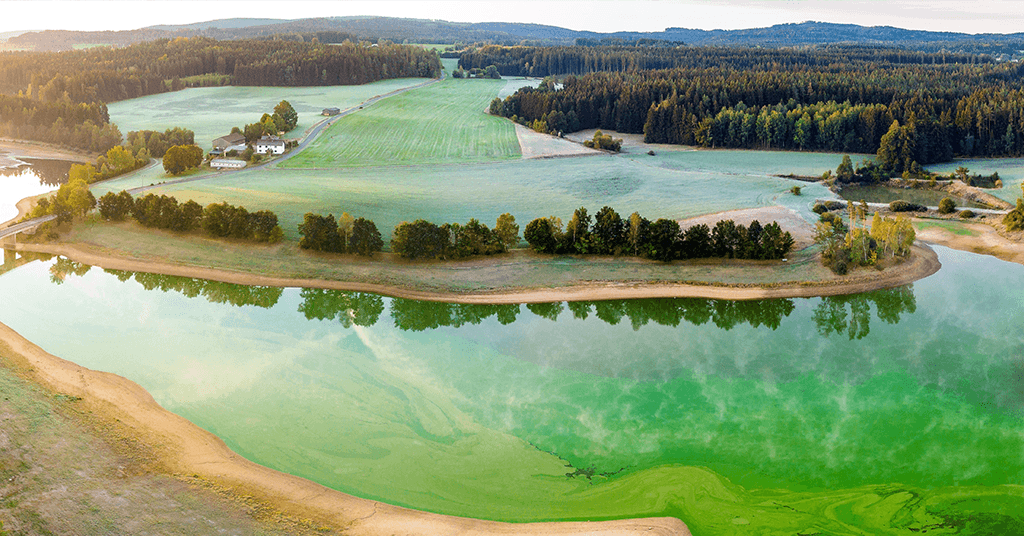
- Targeted algae treatment
However, ozone also needs tighter control than oxygen. Because it is highly reactive, excessive or poorly placed ozone exposure can affect beneficial microorganisms, and residual ozone can be harmful to fish and other aquatic organisms. For that reason, ozone is generally better thought of as a targeted treatment tool than as a standing aeration method.
Oxygen supports ongoing biological activity, while ozone is used when a stronger oxidation or disinfection step is needed. The question of when to use ozone nanobubbles can only be settled by bearing this distinction in mind.
A quick comparison of how oxygen and ozone nanobubbles improve water quality
This is a decision that begins with the exact treatment objective you are working towards.
| Oxygen nanobubbles | Ozone nanobubbles | |
| Main job | Increase and maintain dissolved oxygen | Oxidation and disinfection |
| Best for | Biological treatment, nitrification support, aquaculture, low-DO water | Disinfection, sulfide control, colour and odour reduction, targeted oxidation |
| Effect on biology | Supports aerobic microorganisms | Can also damage beneficial microorganisms if exposure is not controlled |
| Fish/aquaculture | Suitable for ongoing oxygenation | Requires careful control to avoid harmful residual ozone |
| Think of it as | The everyday workhorse, ideal for long term use over extended periods | The specialist tool for quick disinfection and short term cleanup |
Which gas for which job?
Once the treatment goal is clear, the choice becomes much simpler:
| If your problem is… | Use | Why |
| Low dissolved oxygen in an aeration or treatment tank | Oxygen | Supports the aerobic microorganisms carrying out biological treatment |
| Ammonia removal is being limited by low DO | Oxygen | Adequate oxygen supports nitrification |
| Aquaculture or RAS needs ongoing oxygenation | Oxygen | Provides dissolved oxygen without using ozone as a continuous treatment gas |
| A pond, lagoon, or reservoir has low oxygen | Oxygen or air | Raises dissolved oxygen and supports more aerobic conditions |
| You need tertiary disinfection | Ozone | Ozone is a strong oxidant and disinfectant |
| Sulfides, odours, or certain difficult-to-degrade compounds are the problem | Ozone | Oxidation can help transform these compounds |
| You need targeted algae treatment | Ozone | Ozone can damage harmful algal blooms and is used in targeted oxidation applications |
A useful rule of thumb is this: if the process needs oxygen to keep biology working, choose oxygen. If the problem calls for oxidation or disinfection, ozone is usually the better fit.
There are exceptions, and system design still matters. Ozone dose, contact time, water chemistry, and where the gas is introduced all affect performance. But as a first-pass decision guide, the treatment objective is the best place to start.